
Free on-site gate assessment - hinges, posts, and your LiftMaster or Nice gate operator checked before anything is quoted
The assessment is free and the quote is the invoice.
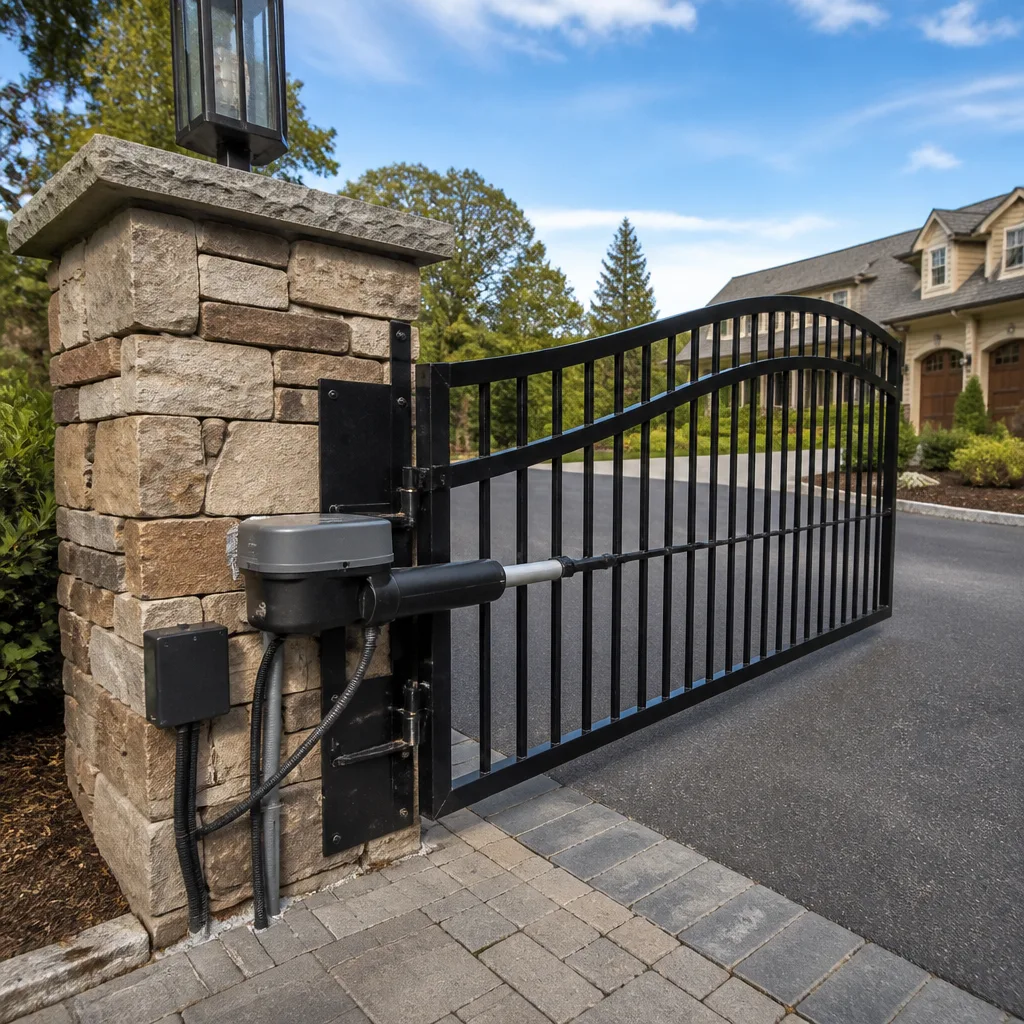
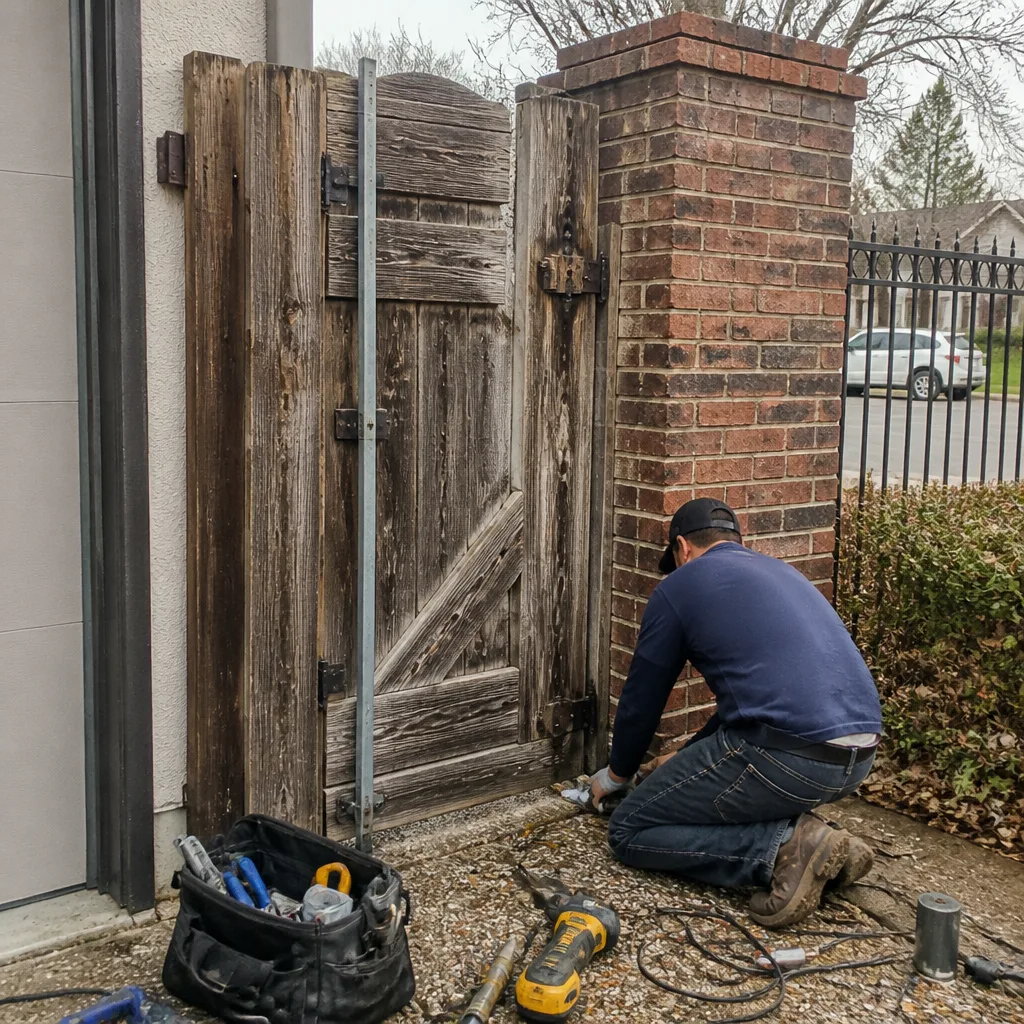 Before
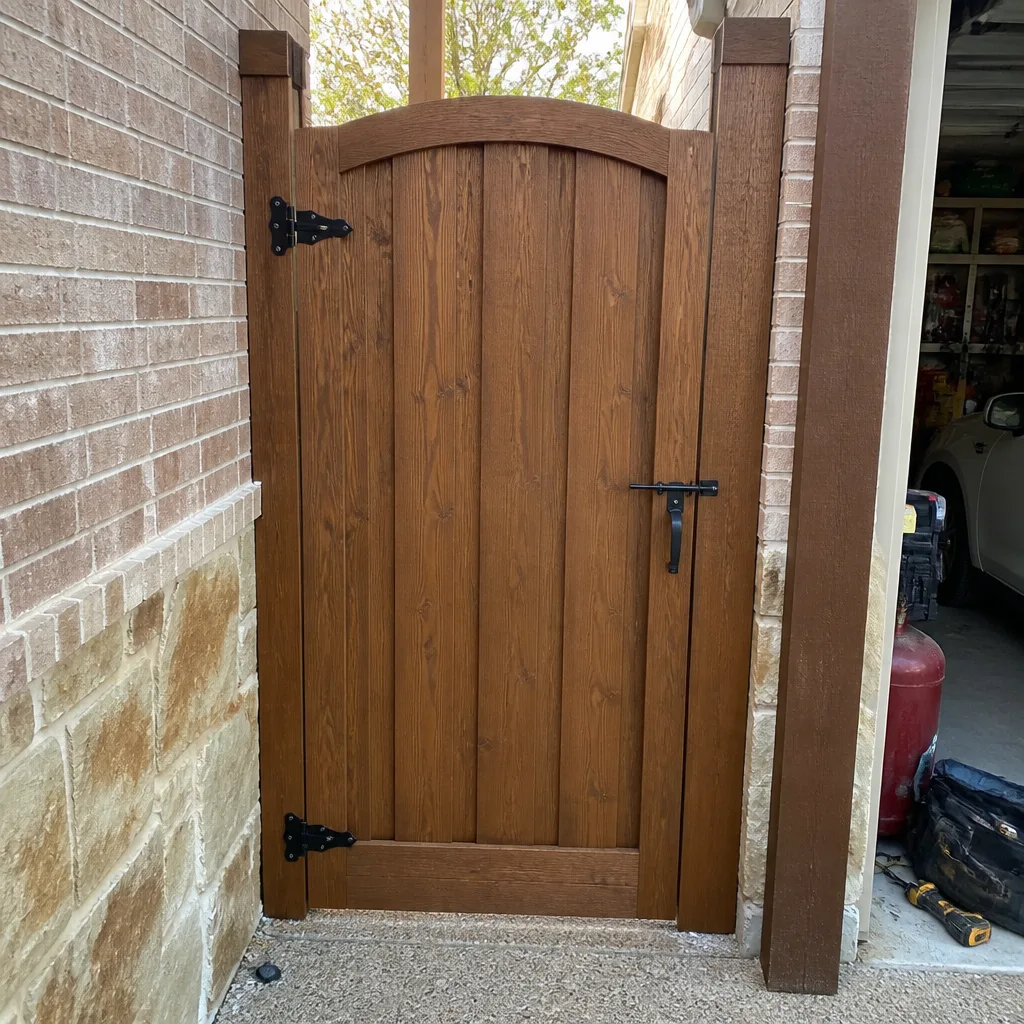 After
After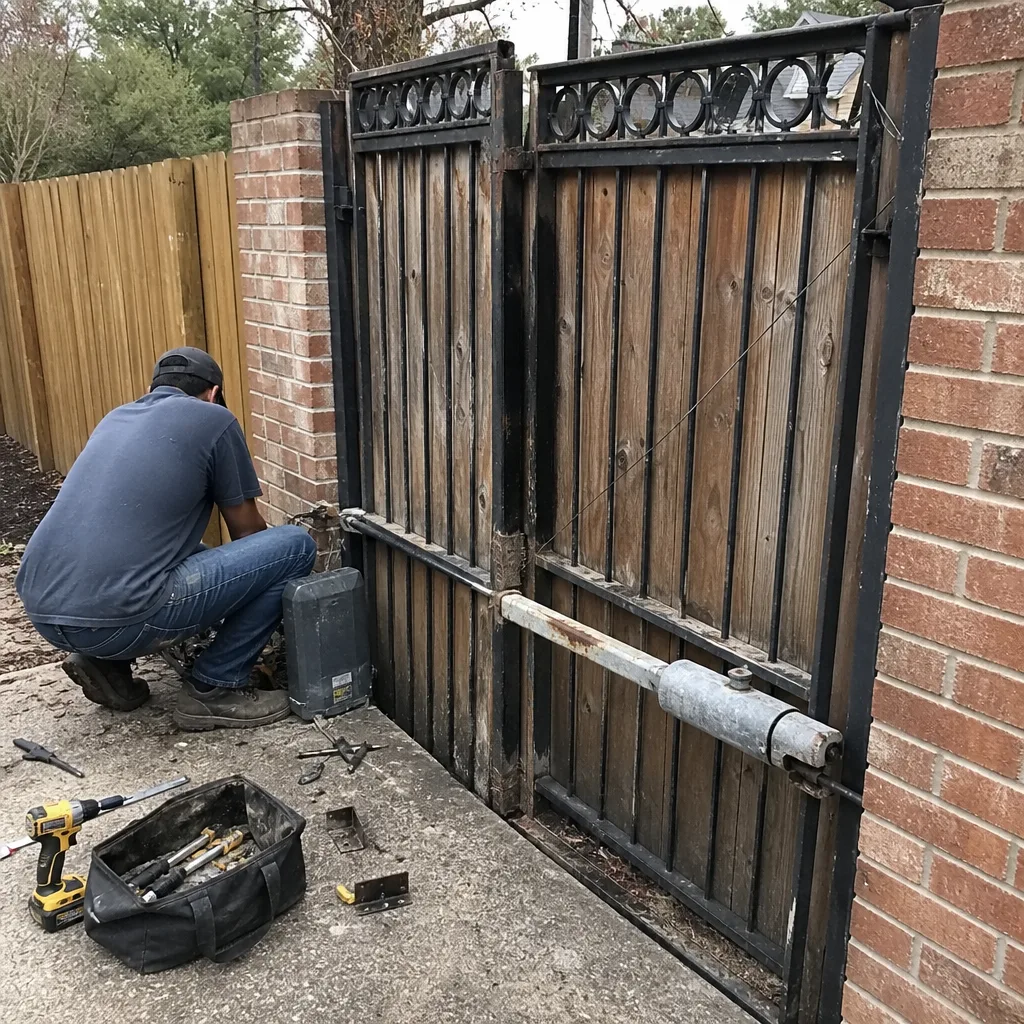 Before
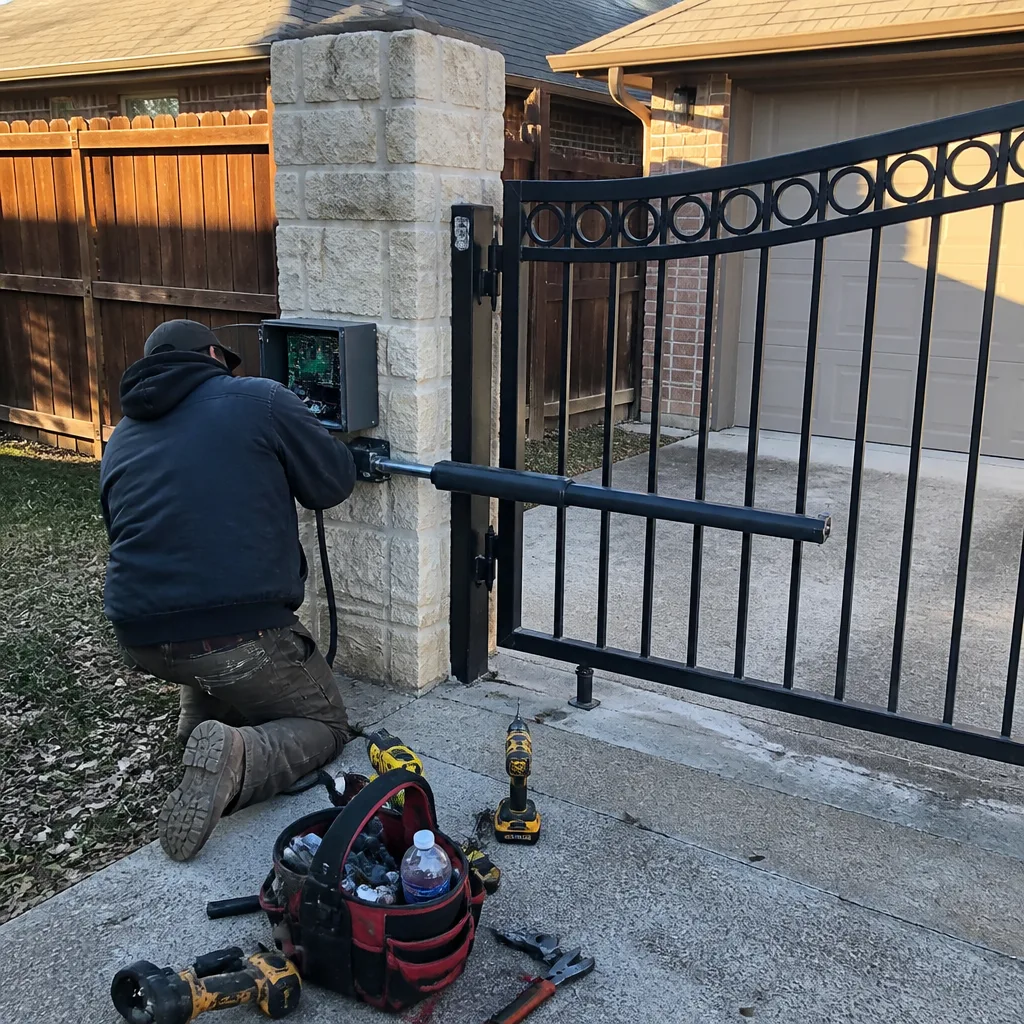 After
After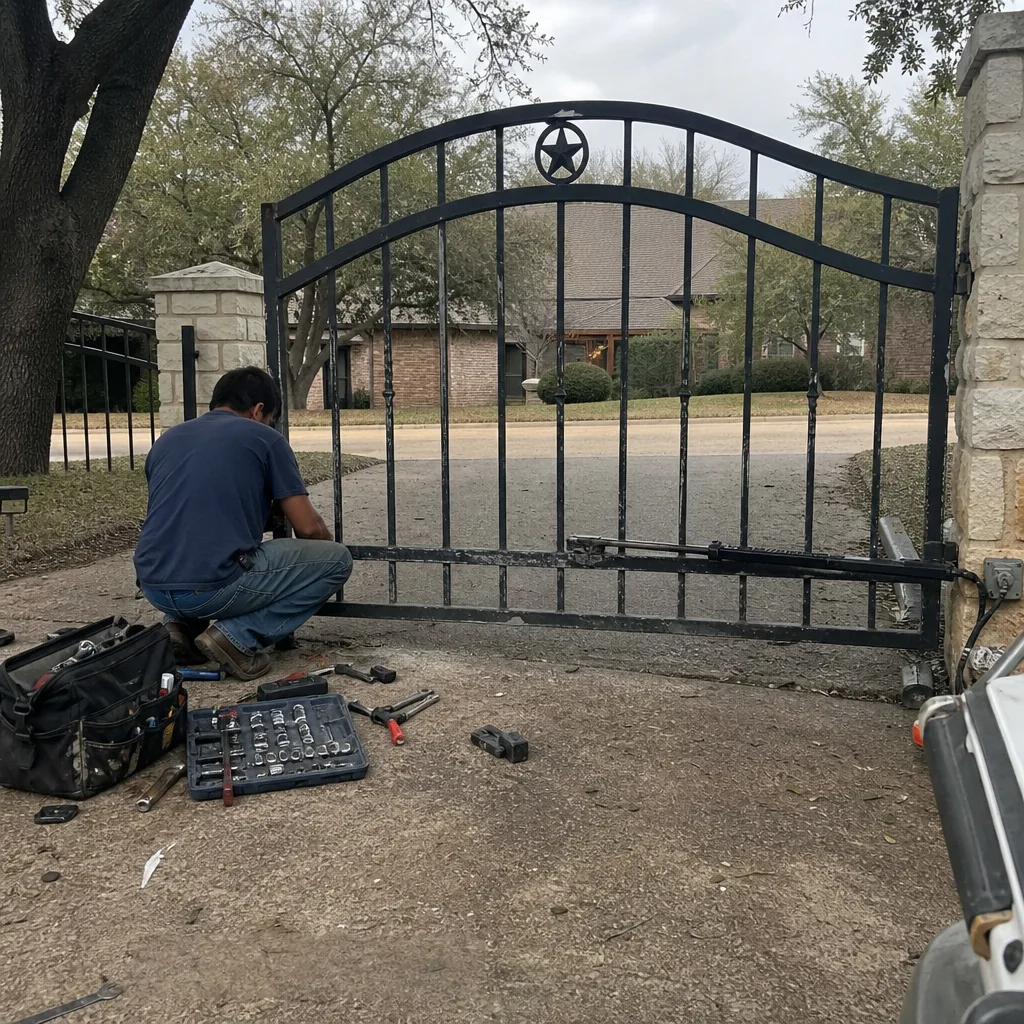 Before
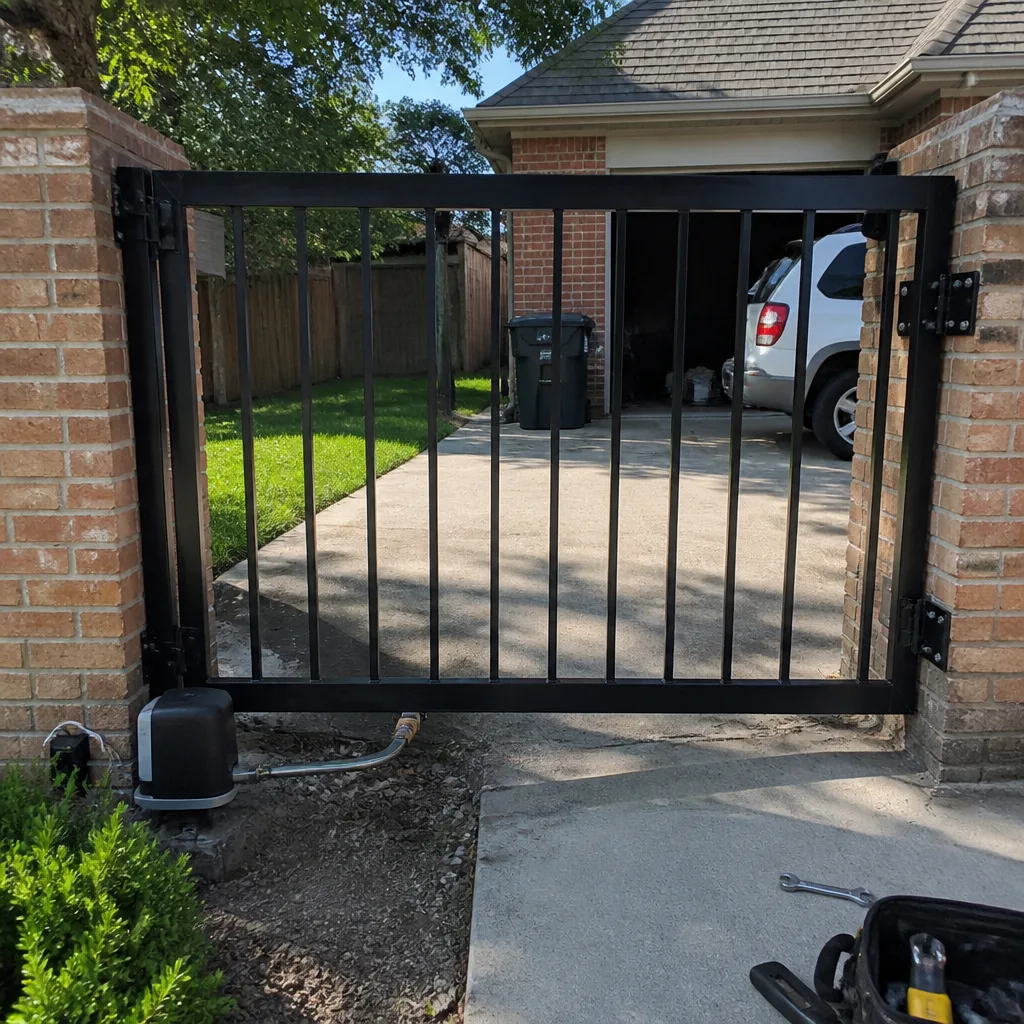 After
AfterFAAC Welding & Fabrication: The Allen Owner’s Guide
We stock and install FAAC-compatible welding and fabrication parts for Allen homeowners, with most bracket, hinge, and mount repairs running $180 to $420 installed depending on the part and the gate’s weight. We carry common FAAC mounting plates, hinge assemblies, and reinforcement brackets on the truck, so most jobs are finished in one visit. You usually find out a weld or bracket has failed when the gate starts sagging toward the latch side, scraping the driveway, or the opener strains against a mount that has cracked loose from the post.
What we see most often in Allen is not the motor failing first. It’s the steel around it. Texas heat, clay soil movement, and years of wind load on a solid gate work the welds until something gives. The electronics are fine. The metal is not. Victor Salinas has spent enough afternoons in Allen driveways to know the difference between a gate that needs a board and a gate that needs a welder – and most of the time, it’s the welder.
Which FAAC Models This Applies To
FAAC builds two main families of swing-gate operators that show up in Allen driveways: the hydraulic 400 series (402, 415, 422) and the electromechanical S-series and C-series (S418, S450H, C720, C721). The welding and fabrication work differs between them. Hydraulic units mount on heavy steel plates bolted or welded to the gate post, and the gate itself carries a mounting bracket that the piston arm attaches to. Those brackets fatigue first. On S-series and C-series units, the operator sits on a steel pedestal, and the arm connects to a bolt-on gate bracket – if the bracket was welded thin or bolted without a backing plate, it will eventually tear out and leave the gate half-connected.
The practical question is whether to use an OEM FAAC bracket or a quality aftermarket equivalent. FAAC’s own brackets are matched to the arm geometry, but they are not exotic – they are steel plate, and a properly fabricated replacement in the right thickness (typically 3/16″ to 1/4″ for a 300 to 600 pound gate) will hold every bit as well. What matters is the arm-to-bracket geometry, and that is where we will not guess. If your gate opens narrow but not wide, or the arm binds at one end of travel, the old bracket was likely positioned wrong from day one, and a new one in the same spot will fail the same way.
Ironworks Gate Co. is an independent service provider, not affiliated with FAAC. We work on their equipment every week, but we are not bound by their parts catalog or their lead times.
Signs Your FAAC Welding & Fabrication Is Failing
- The gate sags at the free end, and the gap at the latch has widened. This is almost always a hinge weld or hinge bracket losing its grip – either the weld is cracking or the post itself is flexing. In Allen’s clay soil, gate posts lean over the years, and a leaning post loads the hinges in a way they were never designed for. The fix is often a re-weld plus post reinforcement, not just a new hinge.
- The opener groans but the gate barely moves. The operator is fighting a mount that has already broken loose. When the mounting plate starts to peel away from the post, the arm loses its mechanical advantage and the motor strains against a moving anchor point. That strain kills gearboxes and pump units, which is a far more expensive failure than the bracket that caused it.
- The gate scrapes the driveway on the swing path. Concrete in north Texas moves with the seasons, but a gate that only started scraping recently is telling you a weld at the hinge side has shifted. The gate is still swinging, but it is not swinging in its original plane anymore.
- You can see daylight between the bracket and the gate. This is the one to catch early. A bracket that has worked loose from the gate face will rattle, chafe the paint, and eventually tear free under a wind gust. If you can see a gap where there used to be metal-to-metal contact, that bracket is already being held by the bolts alone, and bolts in a working gate do not hold forever.
- The opener’s arm makes a popping sound at the start of each cycle. The pop is the arm shifting in a worn or cracked clevis joint. It is not the motor, and replacing the board will not fix it. A new clevis or a re-bored mount is a twenty-minute fabrication fix that costs a fraction of a new operator.
Replacement Cost & What’s Included
In Allen, most FAAC welding and fabrication repairs land between $180 and $420 installed. A simple gate bracket replacement with welding runs $180 to $260. A cracked hinge re-weld with plate reinforcement runs $220 to $320. A full operator pedestal rebuild, where the original mount has torn out and the post needs new steel, runs $350 to $420. If the post itself has rotted or leaned, that is a post reset and re-set job, which we will quote separately after we see what is under the concrete.
Every price is quoted and agreed before any work starts. You will know the number before we strike an arc, and that number does not change unless we find something underneath that we both agree needs addressing – and if we do, we stop and talk first. The work is covered by our 90-Day Done Right Promise, in writing. If it is not right, we come back and make it right. No paperwork, no arguing.
We also keep common FAAC brackets, clevises, and mounting plates for S-series and 400-series units on the truck, so most Allen calls are a single visit. For the older and heavier FAAC 750 and 760 barrier-arm units, we order the specific bracket and schedule the weld the same week.
DIY or Call Us?
Welding on a gate that weighs 400 pounds or more is not a weekend project. The gate is under tension from its own weight, the hinges are load-bearing, and a bad weld can fail suddenly, dropping the gate on a car, a child, or you. A weld can look solid from the outside and be cold underneath. Metal either holds or it doesn’t – let’s make sure yours does.
What you can do safely is help us diagnose before we arrive. Note where the gate is scraping, whether the arm pops at open or close, and whether the gap between bracket and gate is wider at the top or bottom. A quick photo of the operator label and the failed area saves a trip. Then call (936) 274-8988 and we will get a technician to your Allen driveway with the right steel and the right machine.
FAQs
A properly welded and gusseted bracket on a correctly set post should last 15 to 20 years in Allen before the steel itself fatigues. The problem is that many original installs used light brackets or skipped the backing plate, and those fail in 5 to 7 years. Texas sun and clay movement do not help – they expose every shortcut within a few seasons.
Often, yes. A cracked weld can be ground out and re-welded with a reinforcement plate, and a wallowed clevis hole can be re-bored and sleeved. The deciding factor is the thickness of the remaining steel and whether the post is still sound. If the bracket is torn through or the post is lean-polluted, replacement is the honest answer and usually cheaper than a second repair in two years. Call (936) 274-8988 and we’ll tell you which one you have.
Most bracket and hinge repairs are done in 60 to 90 minutes on site, including haul-out of the old steel and paint-up of the new work. A full pedestal rebuild or post reinforcement can run 2 to 3 hours. We carry the common FAAC brackets on the truck, so there is usually no waiting on parts.
We stock the common FAAC S-series and 400-series gate brackets, clevis pins and yokes, and reinforcement plate stock on every truck, alongside our LiftMaster, Mighty Mule, and Ghost Controls hardware. If you have an unusual model, we will order the part and schedule the weld once it is in hand.
Written by Victor Salinas, Owner, Ironworks Gate Co. at Ironworks Gate Co., serving Allen and nearby areas.